ABSOLUTE BEGINNERS
GALAXIES
Galaxies are the largest
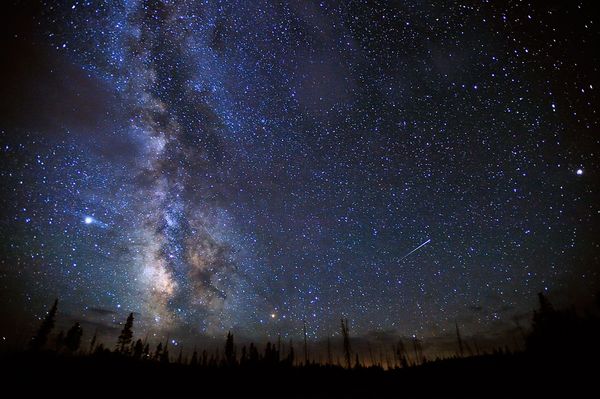
formations or groups of individual stars that we know. All the stars we see in the night sky are
part of a huge family of stars which form our galaxy called the Milky Way or
the Galaxy (with a capital ‘G’). We see
the nearest stars to us as individual stars but as we look at those further
away they tend to merge into the fuzzy glow of the Milky Way. This effect is rather like standing in a
pine wood, the trees nearest to us are individuals but in the distance they
merge into a solid mass of trees.
Looking out into
space beyond our own galaxy we can see other galaxies of many different shapes
and sizes. As amazing as it seems there
are clusters of galaxies and even super clusters of clusters of galaxies. Galaxies can be seen stretching out into the
universe as far as our most powerful telescopes can see.
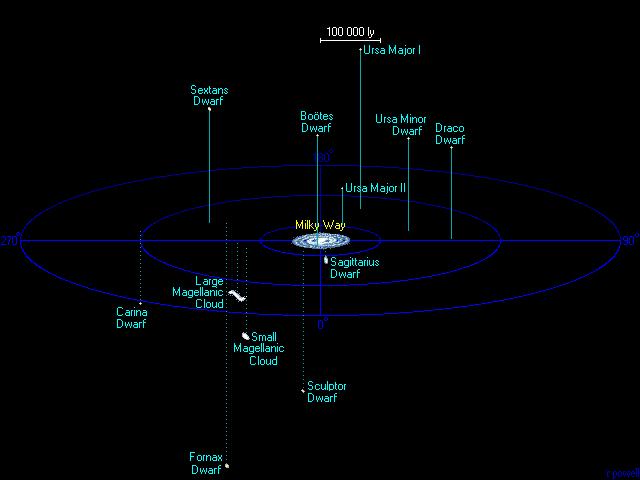
Our galaxy forms
part of what is known as the ‘local group’ of galaxies comprised of about 30
members. The local group is dominated
by two large spiral type galaxies, ours and the Great Galaxy in the
Constellation of Andromeda which can be seen with the naked eye on a very clear
night. The Milky Way has more than 200
billion stars and the Andromeda galaxy is thought to be about twice the size with about 400
billion stars. All the other members of
the local group are smaller and many are located like satellites around the
large spirals.
 |
|
Some of the nearer members of our Local Group of galaxies
|
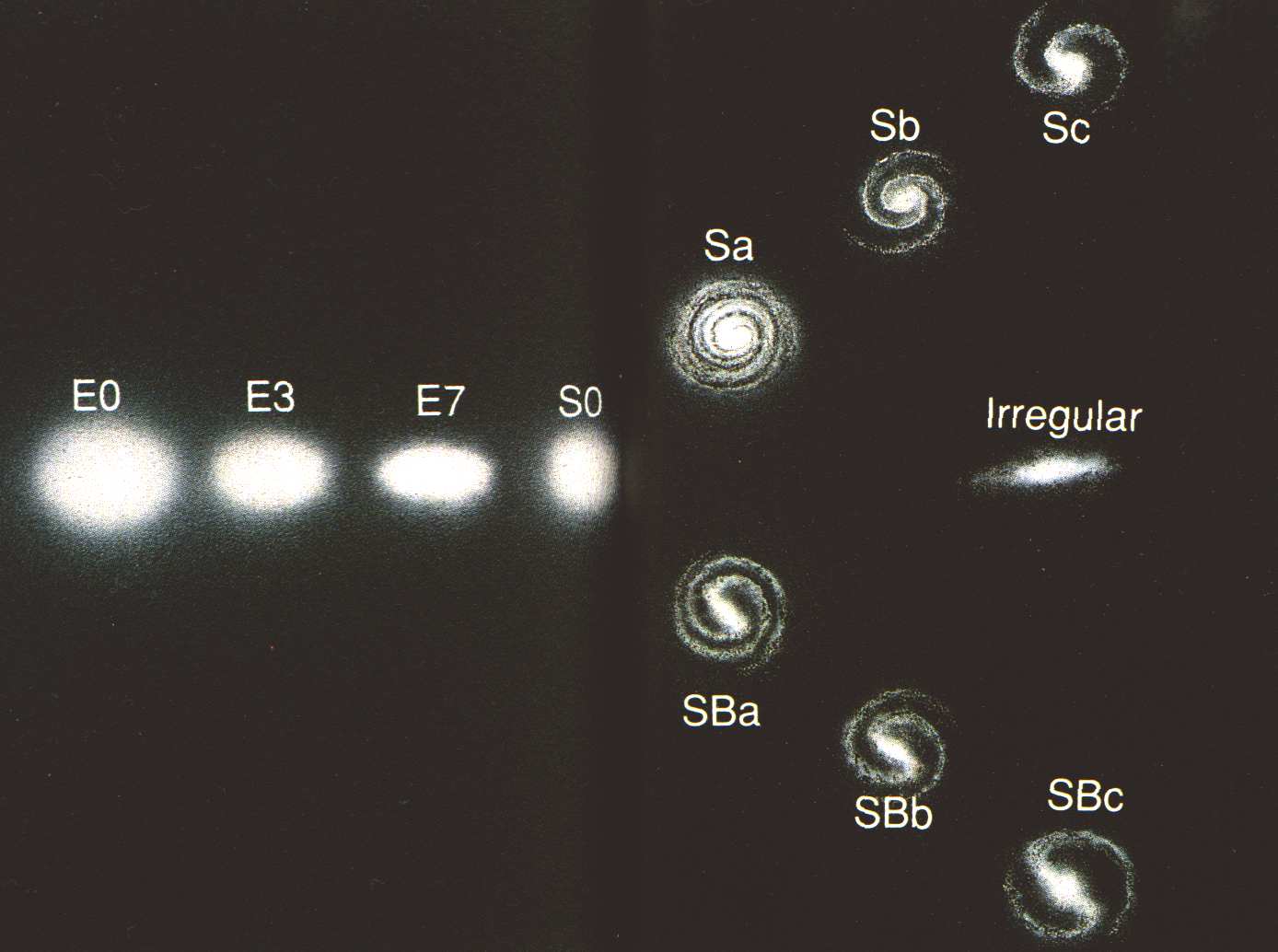
Galaxies are classified into four types, these are Spiral, Barred Spiral, Elliptical and Irregular. Spiral and Barred Spiral galaxies are further divided into three subdivisions a, b and c depending on how tightly the arms are wound. They are therefore referred to as Sa, Sb and Sc or SBa, SBb and SBc. Elliptical galaxies have seven subdivisions ranging from E0 for those that appear round to E7 for those that are nearly cigar shaped.
 |
|
Edwin Hubble's classification of of galaxies |
GALAXIES
SPIRAL GALAXIES
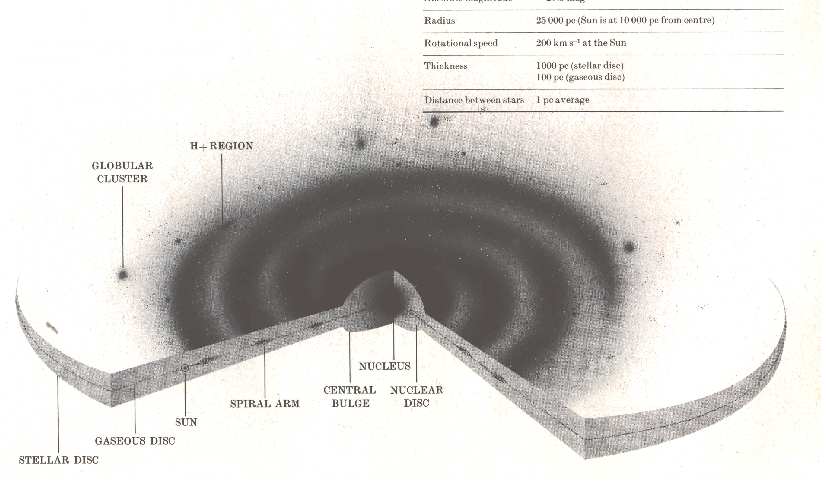
Spirals are usually large and have a bright central
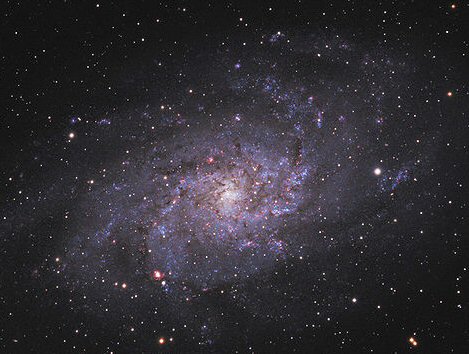
ball of stars with curved arms spreading out from the ball to form a flat disc. Like our own galaxy ‘The Milky Way’, many
galaxies other galaxies have spiral arms.
Some have arms like curved spokes in a wheel some gently curved some
tightly wrapped around the central ball.
Others have what looks like a straight bar of stars extending out from
the central ball with the spiral arms attached to ends of the bar, these are
known as Barred Spiral Galaxies. Spiral
galaxies are classified as a, b or c depending on how tight the arms are wound
preceded by S for Spiral and SB for barred.
e.g. Sa or SBc.
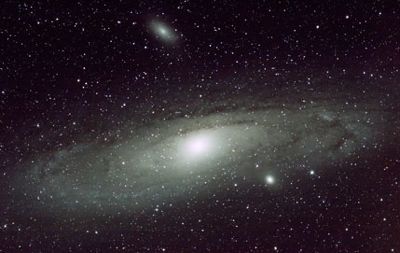
The Great Andromeda Spiral Galaxy is our closest spiral neighbour and
can even be seen with the naked eye on a very clear night and from a dark
location.
 |
 |
M31 the Great Spiral Galaxy in Andromeda |
M33 a beautiful 'face on' galaxy |
ELLIPTICAL GALAXIES
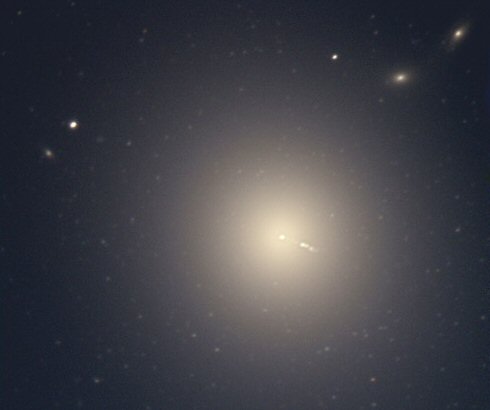
These are huge balls of thousands of millions of
stars. They do not have spiral arms but
are elliptical (egg shaped). Many of
these Elliptical Galaxies are the largest of all star groups, some having many
hundreds of billions of stars and even up to a trillion stars.
Elliptical Galaxies are classified according to how flattened they are,
nearly round ones are known as E0 and sausage shaped ones E7. Most Elliptical Galaxies are very far away
and therefore very faint and need a telescope to see them. There are some indications that the giant
elliptical galaxies grew from the collision of two or more smaller
galaxies. There are indeed some
galaxies which can be seen in the process of colliding and possibly combining.
 |
 |
M87 A giant Elliptical Galaxy |
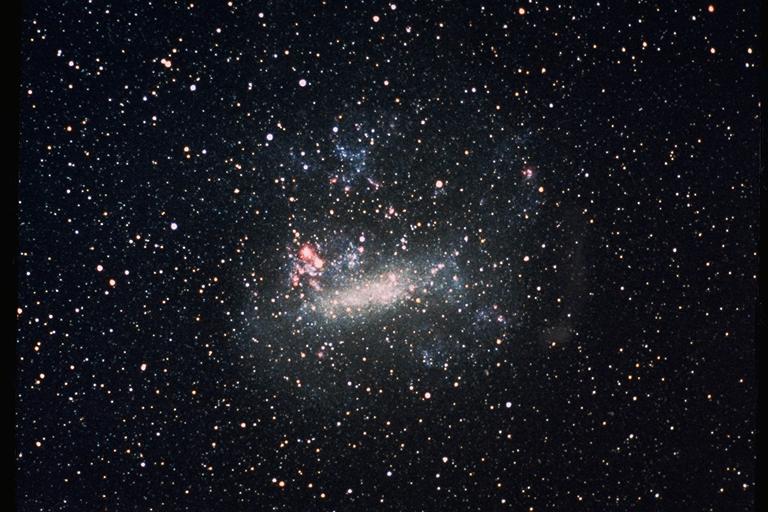
The Large Magellanic Cloud an Irregular galaxy |
IRREGULAR GALAXIES
Return to Absolute Beginners